 55 Park Road,


The False Sense of Security Most Businesses Are Operating In
If you ask most business owners whether they’re protected from cyber threats, the answer is usually some version of “yes.” There’s a firewall in place, endpoint protection is installed across devices, and there may even be a sense that compliance requirements have been ticked off.
On the surface, it feels like everything that should be done has been done. But what we see in practice tells a very different story.
A large percentage of businesses that experience breaches weren’t lacking security tools. In many cases, they had the same tools you’d expect any reasonably protected organisation to have. The issue wasn’t absence – it was execution. Systems were misconfigured, alerts weren’t being monitored properly, or different layers of security weren’t working together in any meaningful way.
That’s the part that often gets overlooked.
Cybersecurity isn’t defined by what you own. It’s defined by how well those systems are configured, maintained, and aligned with real-world threats. This is where expertise becomes the differentiator.
As a leading IT services provider in Sydney, we believe it’s essential to consistently evolve and improve. Recently, members of the Sydney Technology Solutions team completed advanced Sophos certifications in both firewall and endpoint security. While that may sound like a standard milestone on paper, the reality is that it represents something far more important: the ability to properly design and manage security systems in a way that actually reduces risk, not just ticks a box.
What Sophos Certification Actually Means in a Real-World Environment
It’s easy to dismiss certifications as just another credential, especially in an industry where acronyms are everywhere. But not all certifications are created equally, and the Sophos Certified Engineer track is designed to be practical, not theoretical.
Engineers working through these certifications aren’t just learning concepts – they’re working through real configuration scenarios, understanding how different security layers interact, and learning how to troubleshoot issues that arise in live environments.
That includes:
- Setting up and fine-tuning firewall rules
- Managing endpoint detection and response systems
- Identifying behavioural threats before they escalate
- Troubleshooting real-world security incidents
For example, the Sophos Firewall Certified Engineer certification focuses heavily on how traffic is controlled, inspected, and filtered across a network, including policy creation and threat prevention.
On the endpoint side, the training centres around how devices behave under attack: How malware spreads, how ransomware executes, and how those threats can be detected and stopped before they cause damage.
The key takeaway is that this isn’t about installing software. It’s about understanding how attackers operate, then configuring systems accordingly.
Why So Many Security Setups Fail, Even When Everything Is “In Place”
One of the more frustrating realities in cybersecurity is that it’s entirely possible to have all the right tools and still be exposed. We see this more often than most people would expect. Common issues include:
- Firewalls configured too loosely to avoid disrupting users
- Endpoint protection deployed but not actively monitored
- Security alerts generated but never properly investigated
- Advanced features left disabled or at default settings
- No ongoing optimisation as threats evolve
Individually, these issues might seem minor. Together, they create gaps, and those gaps are exactly what attackers look for.
What makes this more challenging is that everything can appear normal from the outside. Systems are running, users aren’t complaining, and there’s no obvious sign that anything is wrong. But underneath that surface, there may be vulnerabilities that have gone unnoticed for months or even years.
This is why so many breaches feel sudden, even though the underlying conditions have been building for a long time.
Why Layered Security Only Works If It’s Actually Aligned
Modern cybersecurity relies on the idea of layered protection. A firewall guards the network, endpoint tools protect individual devices, and additional controls sit on top of that to monitor activity and enforce policies.
In theory, this creates a strong defence. In practice, those layers often operate in isolation…
- A firewall may block malicious traffic but lack visibility into device behaviour
- Endpoint tools may detect threats without broader network context
- Alerts may not be correlated across systems
When these systems are properly aligned, the dynamic changes completely. Activity detected on one layer can inform decisions on another, allowing threats to be identified and contained far more quickly.
That level of coordination doesn’t happen automatically. It requires deliberate configuration and a clear understanding of how these systems are meant to work together.
The Threat Landscape in Sydney Has Changed and It’s Not Slowing Down
Part of what makes this conversation more urgent today is how quickly cyber threats have evolved. We’re now seeing:
- AI-generated phishing emails that mimic internal communication
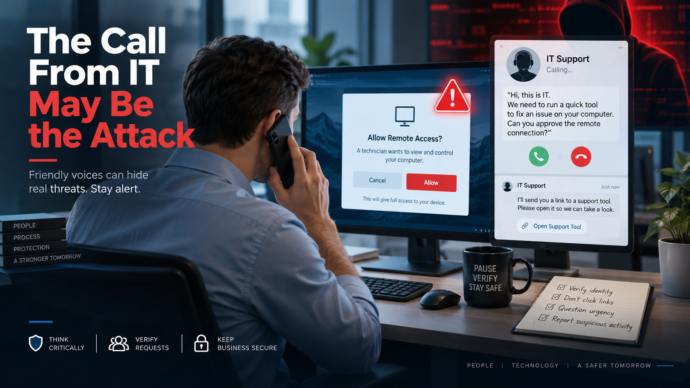
- Voice cloning attacks impersonating executives or vendors
- Highly targeted social engineering campaigns
- Ransomware delivered through increasingly sophisticated methods
These threats are designed to bypass traditional defences and exploit both human behaviour and system weaknesses.
This means security systems need to be:
- Precisely configured
- Continuously monitored
- Regularly tested and optimised
There is far less margin for error than there was even a few years ago.
Where Sophos Certified Expertise Actually Changes the Outcome
This is where certifications start to matter in a tangible way.
An experienced, certified engineer approaches security differently. Instead of simply deploying tools, they think in terms of risk scenarios. They understand how an attacker might move through a system, where weaknesses are likely to exist, and how different controls can be configured to reduce exposure.
They’re also able to:
- Interpret alerts accurately (and avoid both overreaction and complacency)
- Reduce false positives without weakening protection
- Respond more quickly and effectively during incidents
- Continuously refine systems as threats evolve
Perhaps most importantly, they understand that security isn’t static. Without ongoing attention, even well-built environments can degrade over time.
What This Means in Practical Terms
For most businesses, the takeaway isn’t that they need more tools. It’s that they need to take a closer look at how their current tools are being used.
That includes asking questions like:
- Are systems configured with intention, or left at default settings?
- Are alerts being monitored and acted on?
- Do different layers of security work together, or operate independently?
- Is there ongoing optimisation, or just a one-time setup?
These aren’t always easy questions to answer internally, especially without dedicated security expertise.
But they’re important ones — because the difference between a secure environment and a vulnerable one is often not obvious until something goes wrong.
A More Realistic View of Cybersecurity for Sydney Businesses
At Sydney Technology Solutions, the focus has always been on practical protection rather than theoretical coverage. Certifications are one part of that, not because they look good, but because they reinforce the ability to implement and manage systems properly.
With multiple team members now certified across both firewall and endpoint security, that capability has only deepened. Our cybersecurity solutions are designed to truly keep your business safe.
Ultimately, the goal isn’t to collect credentials. It’s to ensure that the systems businesses rely on are doing what they’re supposed to do – quietly, consistently, and effectively.
Get Started with Sophos Certified Cybersecurity Experts in Sydney
Cybersecurity has reached a point where having the right tools is no longer enough. The complexity of modern threats demands a higher level of precision, awareness, and ongoing attention.
For businesses, that means shifting the focus from “what do we have in place?” to “how well is it actually working?” Because that’s where the real difference lies.
If you need a more advanced approach to cybersecurity (and most businesses do), let’s talk. Give us a call at (02) 8212 4722 or fill out the form to schedule a risk assessment.